%201.svg)


.svg)
QAPI Meaning, Importance, and Key Elements


Take Control of QA.
Make Inspections Effortless.

We’ll quickly uncover your needs and share how we can help—no pressure, no stress, just solutions. Grab your spot on our calendar today!
Be survey-ready every day with three simple dining audits
We’ll quickly uncover your needs and share how we can help—no pressure, no stress, just solutions. Grab your spot on our calendar today!
QAPI is mandatory in skilled nursing centers and nursing homes, especially if they participate in Medicare or Medicaid programs.
The acronym QAPI means Quality Assurance and Performance Improvement. It is a systematic approach to improve organizational processes, health outcomes, and the quality of life for patients.
This article further explains the definition and importance of QAPI. You'll also learn the key elements or standards that fulfill QAPI requirements.
What is Quality Assurance and Performance Improvement (QAPI)?
Quality Assurance and Performance Improvement, or QAPI, is a formal method of checking and enhancing health and safety.
QAPI programs establish clear standards, track performance, identify healthcare gaps, and fix the systems that cause those issues in the first place. The goal is to provide steady, ongoing, and high-quality care.
An effective QAPI program combines two complementary approaches:
- Quality Assurance (QA) checks whether care services meet set standards.
- Performance Improvement (PI) studies processes and implements preventive actions so the same issues do not return.
The Affordable Care Act requires skilled nursing centers to develop such QAPI programs. QAPI also applies to other healthcare organizations that provide long-term services, such as assisted living facilities participating in Medicare and Medicaid programs.
The Centers for Medicare and Medicaid Services (CMS) sets the rules and reviews QAPI work through surveys. The CMS also provides the necessary resources and free tools to help multi-site facilities implement an effective QAPI plan.
The Importance of QAPI
QAPI matters because it provides a clear way to identify care problems early and fix what causes them. In nursing homes and assisted living facilities, this helps you ensure resident safety, prepare for surveys, meet regulatory requirements, and avoid repeat issues that drain staff's time.
It also shows families, stakeholders, and regulators that your facility does not wait for harm to happen before taking action.
Using a QAPI framework can benefit your organization in several ways:
- Improve outcomes: Determine areas for improvement and adjust care steps accordingly to ensure better support.
- Reduce errors and adverse events: Identify the root causes of problems and develop actions aimed at reducing them.
- Cut operational costs: Fewer mistakes mean less waste, lower readmissions, and better use of your budget.
- Enhance quality of life: Implement changes in daily systems, processes, and practices that benefit residents.
- Promote a culture of continuous quality improvement: QAPI requires regular assessments and progress tracking to improve quality management over time.
- Ensure care consistency: With a clear QAPI program, staff follow the same standards to ensure consistency across multiple locations.
- Increase staff accountability: Team members always know what is expected and stay on track.
5 Key Elements of QAPI
These five elements match the QAPI regulations established by the CMS. They show what your QAPI program should cover and how to run it.
1. Design and Scope
The first part involves creating an effective, comprehensive, and data-driven QAPI program. It should cover all care services across different departments.
These include clinical care, dining, activities, housekeeping, safety, and any service you provide under contract or arrangement.
Set clear goals tied to clinical care, quality of life, and resident choice. Then, select measures that indicate whether you are meeting those goals.
2. Governance and Leadership
The governing body of any nursing home or assisted living facility should own QAPI. This means designating a QAPI lead and providing the necessary training.
Leadership teams should remove barriers, approve changes, and hold people to the QAPI plan.
They also need to promote a no-blame culture where staff members can report problems freely. Lastly, they need to track who is responsible for each action and follow up on deadlines.
3. Feedback, Data Systems, and Monitoring
Your facility should collect feedback from many sources and monitor trends over time. Seek input from staff, nursing home residents, and their families or representatives.
Use the data collected to monitor service effectiveness and identify areas for improvement. Leadership teams approve the frequency and scope of this data collection.
You should also establish performance indicators to review processes and outcomes against known benchmarks or goals.
Then, analyze adverse events and their underlying causes. Make sure to implement corrective actions designed to prevent recurrences.
4. Performance Improvement Projects
The CMS requires targeted improvement projects, often called PIPs. These are focused efforts that address high-risk, high-volume, problem-prone areas in your facility.
Start by gathering information systematically to identify current issues.
Next, develop action plans that correct identified quality deficiencies and improve care in areas needing attention.
Don't forget to document performance improvement activities undertaken, the reasons for conducting PIPs, and the progress you achieved.
5. Systematic Analysis and Systematic Actions
You should use a systematic, data-driven approach to analyze your facility's performance. This helps you identify trends and evaluate whether changes in care delivery can lead to improvements or issues.
Establish procedures that show proficiency in root cause analysis. You should also implement systematic actions to prevent the same problems from recurring.
Lastly, document the solutions and how you will measure progress later to support continuous improvement.
How Can MyFieldAudits Help With QAPI?
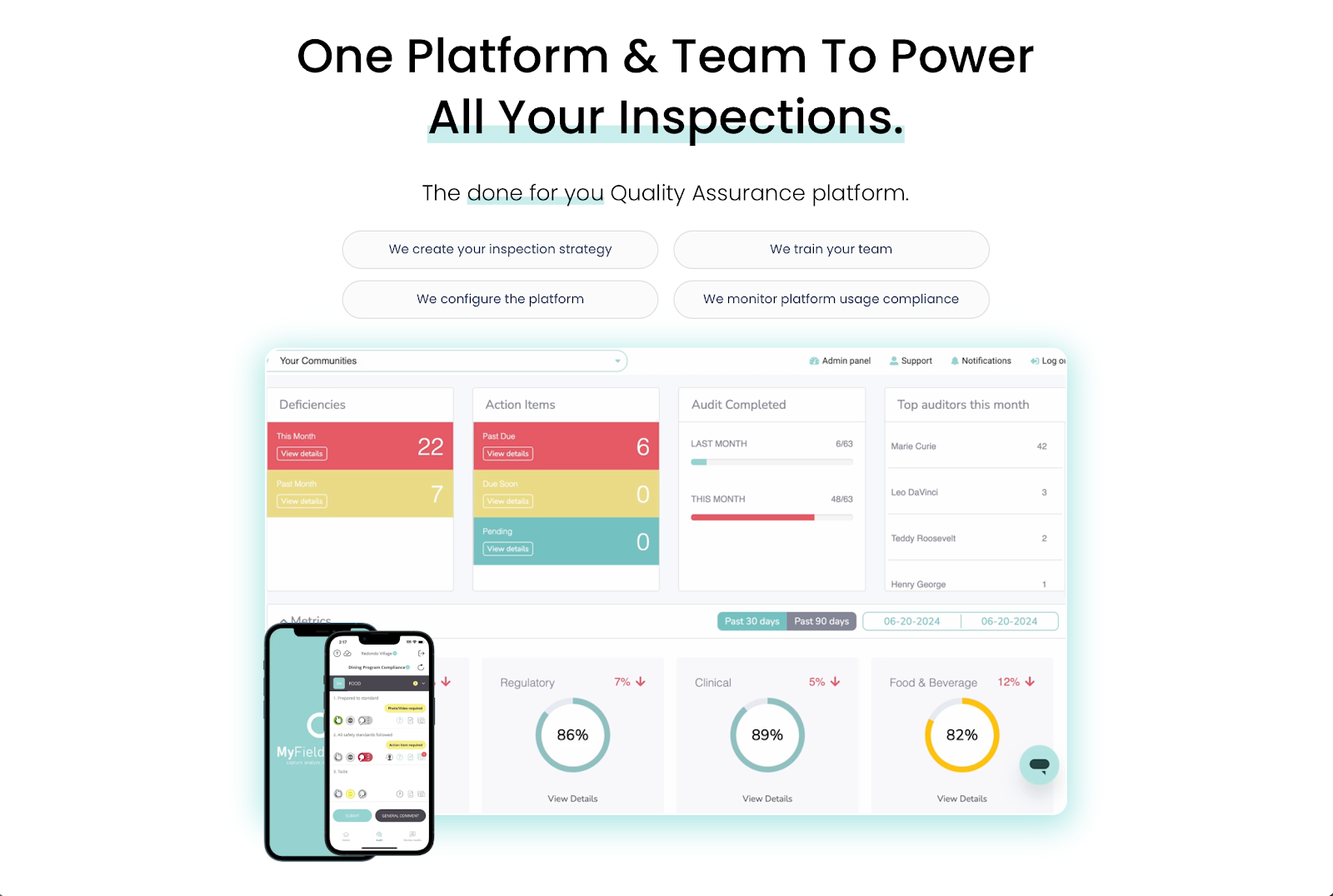
MyFieldAudits helps you run QAPI with less guesswork. Your team can conduct audits on-site using a mobile inspection app, capture what is happening in real time, and turn findings into shareable reports.
That means you always have proof to show where care or service is off track and what you did to fix it.
MyFieldAudits also supports the part of QAPI that many facilities struggle with most: proving value over time while managing multiple locations.
Leaders, clients (patients), and their families can see inspection results and corrective actions in real time. This boosts stakeholder trust, which eventually builds retention.
MyFieldAudits is more than just another quality assurance platform. It acts as your retention engine that handles the heavy lifting for your facility. This allows you to focus on providing high-quality, long-term care.
Schedule a demo today to get started! You can also watch this video to learn how MyFieldAudits helps you fix what's broken and improve daily processes.
FAQs About QAPI Meaning
What are the five elements of QAPI?
The five elements are design and scope, governance and leadership, feedback/data systems/monitoring, performance improvement projects, and systematic analysis with systematic actions. They support quality assessment, set clear expectations for all teams, and help you correct deficiencies through regular reviews and ongoing change.
What is a QAPI in healthcare?
A QAPI program in healthcare settings checks how care and services are working, finds gaps, and fixes the causes behind them. It promotes a proactive approach to improving safety and care results across the whole site.
What is discussed at a QAPI meeting?
During a QAPI meeting, your team reviews current data, trends, and feedback. You assess risks, such as falls or infections, and determine the next course of action. Then, you set goals, assign owners, track past progress, and check if changes helped correct quality deficiencies.
What are examples of QAPI projects?
Examples of QAPI activities or projects include reducing falls, lowering UTI rates, improving medication safety, and conducting satisfaction surveys. You may also work on dining service, infection control, or staff training gaps.



%201%20(1).svg)