%201.svg)


.svg)
5 Best Software for Food Service Directors in 2026


Take Control of QA.
Make Inspections Effortless.

We’ll quickly uncover your needs and share how we can help—no pressure, no stress, just solutions. Grab your spot on our calendar today!
Be survey-ready every day with three simple dining audits
We’ll quickly uncover your needs and share how we can help—no pressure, no stress, just solutions. Grab your spot on our calendar today!
As a food service director, you're responsible for maintaining high standards, meeting food service regulations, and providing value to your clients. Doing all of these tasks with paper logs or spreadsheets is inefficient and prone to human errors.
That is where food service software comes in. It replaces paperwork with digital tools that put real-time visibility and performance tracking directly in your hands. It helps you oversee operations in multiple locations from one platform.
This article reviews the best software designed for food service directors. But first, let's discuss how this platform helps address the challenges you face daily.
TL;DR
These are the best software for food service directors:
- MyFieldAudits
- MealSuite
- FoodDocs
- Delegate Foodservice
- Dietary Manager Online
Common Challenges Faced by Food Service Directors
Food service directors overseeing assisted living facilities, school campuses, and corporate dining programs share the same problems. Here are the challenges you can expect, especially when dealing with large operations.
Maintaining High Standards
When you oversee different locations, keeping the same standards everywhere is difficult.
For example, a college campus may have dozens of dining halls. An assisted living community might serve different care levels. Meanwhile, a corporate client may operate in different states.
Without standardized processes, daily operations and decisions are reduced to guesswork or intuition. This leads to serious risks and inconsistencies when it comes to food safety, portion control, or preparation methods.
Managing Multi-Site Operations
Multi-site management is challenging because you cannot be everywhere at the same time. You may visit one location while problems appear at another.
Data scattered across emails, spreadsheets, or paper logs also makes it difficult to see what is really happening on the ground. You may spend hours chasing people down for updates instead of fixing issues or making important decisions.
In large campuses or corporate accounts, the lack of real-time visibility can lead to food waste, safety violations, or uneven service levels.
Training Staff and Keeping Them Aligned
Staff turnover is common in food service operations. New hires may rotate often, especially in schools and senior living.
Training is important, but it takes time. Plus, methods are not always the same at each site.
Without shared tools, teams rely on word of mouth or inconsistent training. This creates gaps in recipe management, task tracking, and staff expectations.
Meeting Nutrition, Safety, and Compliance Requirements
Food service has strict rules. For instance, schools participating in federal reimbursement programs should follow USDA nutrition standards. Senior living communities and nursing homes must comply with CMS dietary regulations. Corporate dining often has contract and reporting duties.
These regulations often change and overlap. It's your job as a food service director to keep up with federal guidelines, state laws, contract terms, and internal policies at the same time.
The real strain comes from tracking all of these rules in more than one location. Logs may be kept on paper, or updates may sit in email threads. A single missed inspection or an outdated menu file can create problems during external reviews.
Tracking Inventory
Inventory tracking is challenging because demand is not steady in food service operations. A college campus may see sharp swings during school events or breaks. Meanwhile, corporate offices might face rapid growth or attrition, forcing them to change headcounts weekly.
As a food service director, you should manage stock levels, expiration dates, storage space, and delivery schedules at the same time.
However, inventory counts often depend on staff consistency, timing, and accuracy. When one site misses a count or records it late, your numbers are already off.
Over-ordering and shortages happen fast without accurate inventory tracking. This leads to food waste and financial losses (for oversupply) or rushed orders and disappointed clients (for undersupply).
Controlling Costs
You need to keep operational costs under control, but it's difficult when expenses come from many directions at once.
Food costs change often, vendor terms vary by location, and deliveries do not always match demand forecasts.
Labor expenses add another layer of pressure. Hours worked, overtime, and callouts all affect spending, especially in large teams.
Plus, financial data may come in late or from different sources. One site may track usage differently from another.
When food, labor, and purchasing data are not aligned, it becomes hard to see where money is being lost or why budgets drift over time.
How Does Food Service Software Help?
Food service software helps you solve daily challenges by:
Standardizing Food Service Processes
Digital software sets food standard operating procedures (SOPs) for every site you manage.
Instead of each kitchen working its own way, the system defines structured steps for food preparation, service, and safety checks. This brings structure to back-of-house operations that are often shaped by habit instead of strict policies.
It also supports better table management in shared dining spaces by setting clear service flow and usage rules.
Day-to-day operations become easier to monitor and less dependent on who is on shift. This helps you maintain high standards while managing dozens (or even hundreds) of locations.
Centralizing Data
Food service systems integrate seamlessly with other platforms, such as cloud-based point-of-sale (POS) systems, accounting software, and customer relationship management (CRM) tools.
Data no longer sits in multiple systems. Instead, everything (from menu management to team scheduling) is consolidated in one platform.
You gain instant clarity into what's happening on the ground without chasing people down for updates or lifting a spreadsheet.
With centralized control, you can also review numbers faster and address issues before they escalate. For example, you can quickly identify oversupply and reduce food waste by limiting online orders until ingredients are consumed.
Improving Team Communication
The right software puts real-time visibility, accountability, and performance tracking directly in the hands of the people doing the work. It provides access to shared spaces where updates, tasks, and notes live together.
These built-in communication tools help food service directors, staff members, and clients stay aligned without long email chains. When everyone knows what is needed and where to find updates, confusion drops.
Plus, employee engagement improves by giving teams clarity on expectations and changes. That leads to fewer repetitive concerns, fewer missed tasks, and more consistent follow-through, even with minimal training.
Conducting Audits and Generating Reports
Food service software streamlines compliance management by conducting audits. It allows you to identify and address risks before they become compliance violations.
Food service platforms can also generate detailed reports, which act as proof of compliance and performance.
These reports even help you answer questions from clients and regulators with confidence. Instead of pulling files from multiple sites, you review data from a single dashboard. You avoid scrambling when auditors arrive and instantly see how different sites follow food service standards.
Streamlining Inventory Management
Inventory becomes easier to oversee when counts, usage, and orders are tracked the same way everywhere.
Food service software integrated with inventory management systems can show you what is on hand in multiple locations. This supports better planning without relying on late updates or guesswork.
You can align inventory with menus and planned service levels. When usage trends are easier to see, you also adjust orders and minimize food waste before it impacts budgets.
Reducing Human Errors and Compliance Gaps
Mistakes often happen when food service directors rely on memory, paper forms, or emails. Missed logs, incomplete records, and inconsistent checks increase compliance risks and lead to rework.
Food service software reduces these issues by guiding staff through key steps and requiring the same formats across all sites.
Fewer errors mean fewer failed audits and less time spent correcting problems. Over time, this leads to cost savings because you avoid penalties and overtime.
5 Best Software for Food Service Directors in 2026
Here are the best software solutions that food service directors use to ensure smooth operations, safety, and client satisfaction.
1. MyFieldAudits
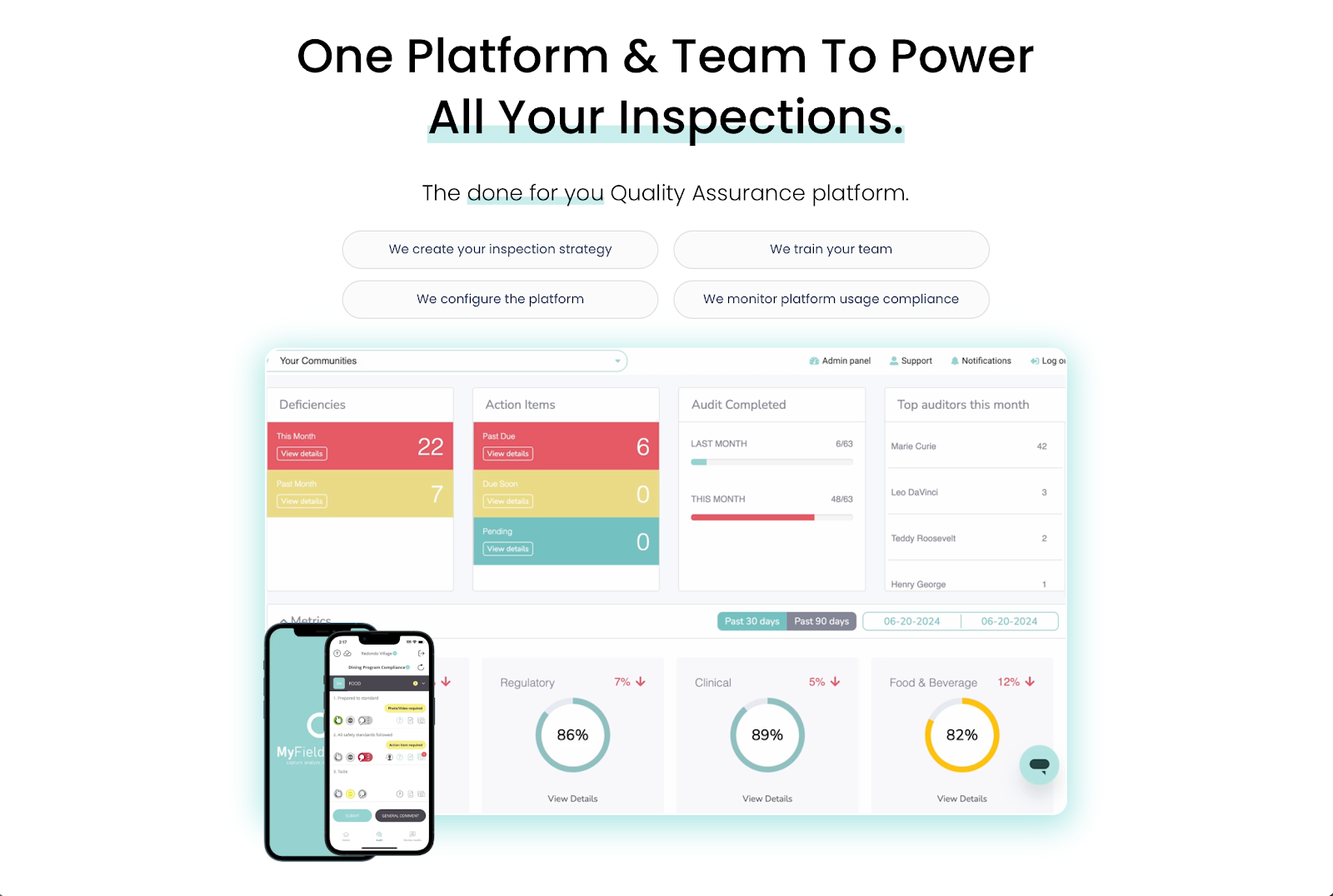
MyFieldAudits supports food service directors like you by providing structure, accountability, and clarity on what's happening on the ground.
Its mobile-friendly inspection platform lets you conduct inspections in real time, from anywhere. This helps you identify recurring issues and inconsistencies in daily operations, so you can fix them faster.
Mobile inspections also make sure that operational standards and contractual key performance indicators (KPIs) are being met in all locations without lifting a spreadsheet.
Inspections sync to detailed reports that show proof of performance to clients. Customers see the value you bring through every inspection. This real-time visibility builds trust and improves client retention.
MyFieldAudits stands out from other software solutions by acting as your retention engine. It doesn't just give you access to digital tools. It manages the entire lifecycle of on-site inspections, from mobile field execution to real-time reporting.
Industry experts will even help you implement a quality assurance program, train your team, and configure the platform to your specific needs.
Key Features:
- Advanced platform: Conduct inspections, assign action items to on-site teams, and monitor compliance. You can also upload photo and video examples of food service guidelines and standards.
- Customized solutions: Develop custom QA programs and inspection forms that meet your operation's critical metrics.
- Dedicated support: Let the experts handle the heavy lifting (from training to ongoing monitoring) to ensure accurate, consistent, and actionable data.
- Enterprise-level focus: Designed for large and multi-site operations, not individuals or those seeking off-the-shelf solutions.
Schedule a discovery call today to learn how MyFieldAudits ensures operational excellence. You can also watch how the platform works by visiting this product overview.
2. MealSuite
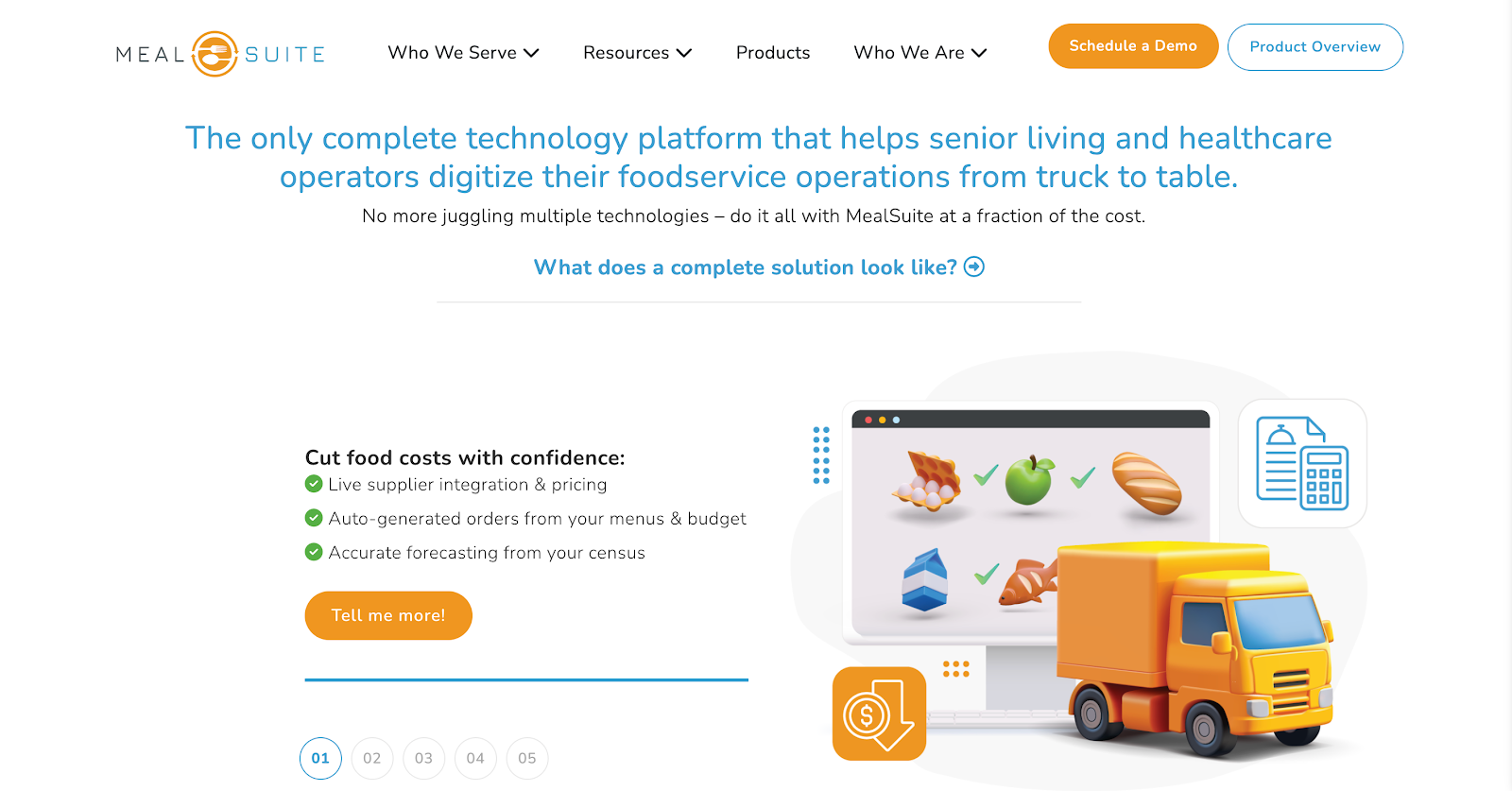
MealSuite is an all-in-one food service management solution designed for skilled nursing homes, assisted living communities, and acute care facilities. It helps food service directors manage complex menus and nutritional requirements.
The platform includes an extensive database of regular and therapeutic recipes that pass HACCP audits.
It also replaces recipe binders and daily production sheets with a user-friendly touchscreen platform. This offers digital operational checklists, paperless reports, and temperature monitoring features to streamline food service operations.
Mealsuite even uses machine learning and AI technology to automate day-to-day operations. ANDI, the virtual assistant, can reduce manual efforts around menu substitutions, purchasing, forecasting, and more.
Key Features:
- Extensive recipe database: Access 9,000+ HACCP-ready recipes, which include nutritional data and flags for textures and allergens.
- Paperless solutions: Track production steps, monitor food safety compliance, develop checklists, generate reports, and receive alerts from a single platform.
- Intelligent automation: The AI-powered virtual assistant, ANDI, automates manual tasks and improves operational efficiency.
- Bedside and tableside ordering: Take orders from both tableside and bedside and deliver the right meals efficiently.
3. FoodDocs
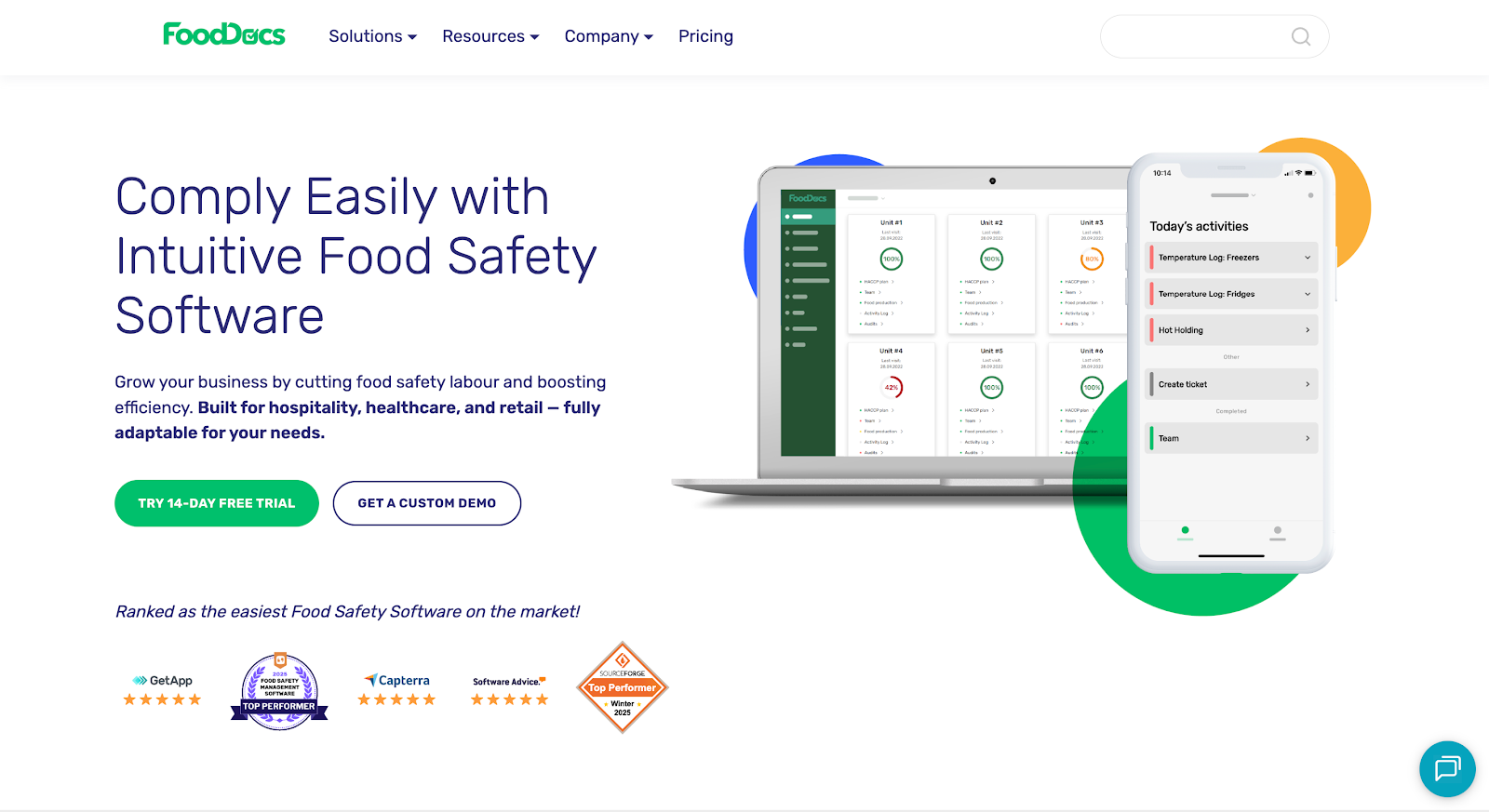
FoodDocs is an AI-powered food safety management system (FSMS) built for the hospitality and healthcare sector.
It has a user-friendly interface that allows staff to complete tasks quickly. Meanwhile, mobile accessibility means they can use FoodDocs on a smartphone or tablet.
The software also features a real-time dashboard that tracks temperatures, flags missed checks, and monitors task progress. This helps food service directors identify issues before inspectors do.
Plus, FoodDocs provides step-by-step training instructions. Staff see clear guidance on what to do, when to do it, and how to record it. This reduces errors and supports consistent food service, even with constant turnover.
Key Features:
- Mobile app and alerts: Complete food safety tasks and receive notifications from your smartphone or tablet.
- Customizable dashboard: Flag risks, monitor temperatures, track activity, and implement corrective actions from a single platform.
- Educative instructions: Built-in guidance shows staff how to complete safety tasks correctly.
- AI-powered reporting tools: Translate complex food safety data into actionable insights. Heatmaps, graphs, and tables keep compliance under control.
4. Delegate Foodservice
Delegate has developed a cloud-hosted, mobile-friendly solution that helps you manage the entire food service process, from supplier communications to guest service.
Its food service software combines purchasing, inventory management, menu planning, food production, cost calculation, and reporting. This helps you deliver hundreds or thousands of meals to your clients without compromising food safety or quality control.
The platform also tracks ingredients and the equipment used through batch-based, digital proof of production. It can reduce waste and save time by eliminating the need for paperwork.
Delegate Foodservice integrates with existing systems, including digital signage solutions, POS systems, and user authentication platforms. Shared data helps different teams stay aligned, while leadership gains a clearer view of performance.
Key Features:
- Enterprise resource planning: Connect purchasing, inventory management, vendor communications, finance, and operations into one shared system.
- Central production: Manage multiple locations and large-scale food production processes using a paperless system with barcode integration.
- Menu ordering system: Empower clients to order their preferred meals while still meeting regulatory standards and dietary requirements.
- Room service: Patients order via their own mobile devices, bedside terminals, or the central call center. The corresponding receipt is automatically printed in the kitchen to ensure timely food preparation and delivery.
5. Dietary Manager Online
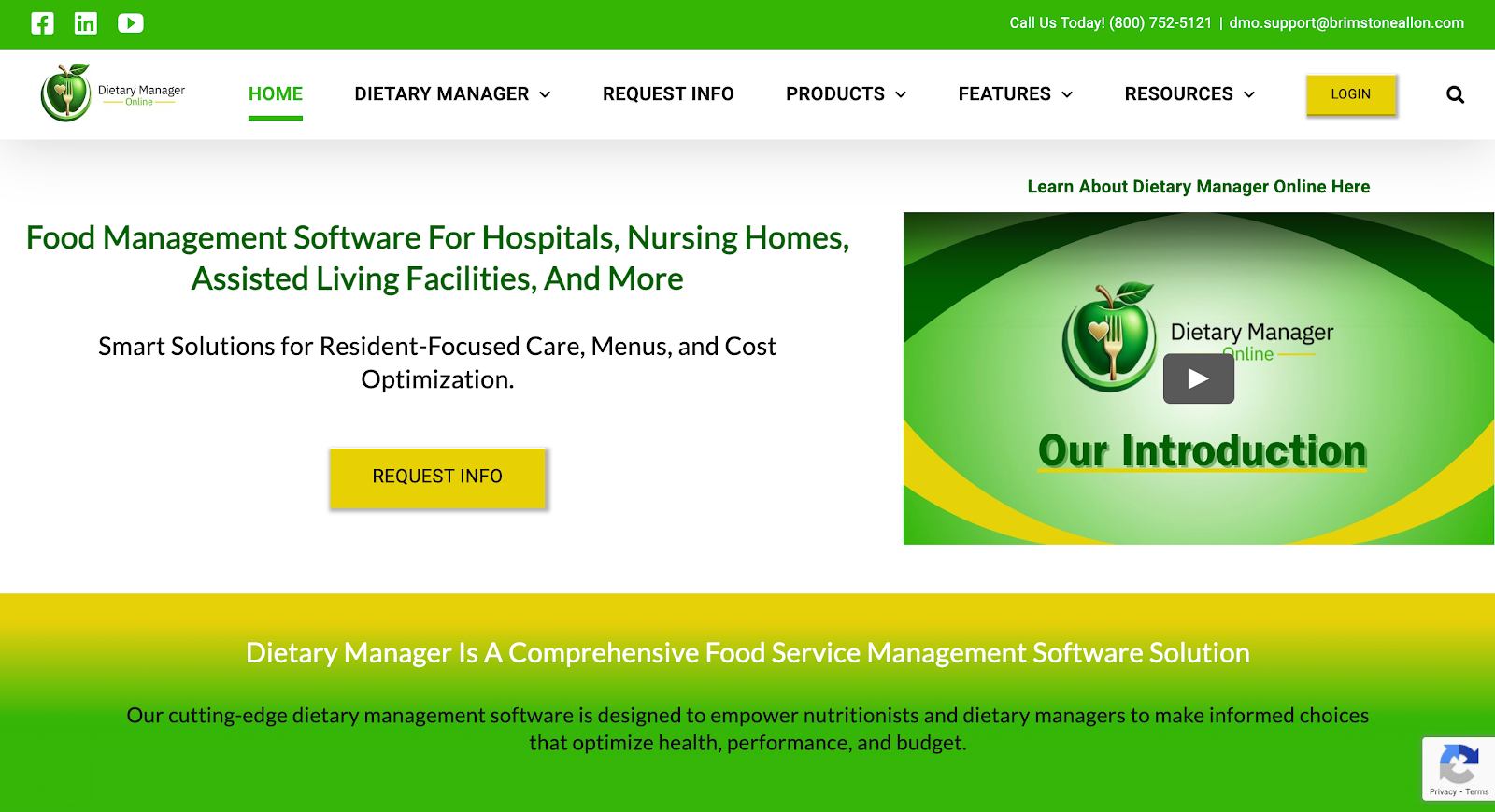
Dietary Manager Online (DMO) is an all-in-one food service management solution for hospitals, nursing homes, and assisted living facilities.
The software helps you manage inventory, track resident nutrition, and coordinate food service operations without relying on separate tools.
DMO also assists in menu planning and recipe development. It provides access to recipes and pulls out the ingredients list from a product inventory file to save time.
It even features scheduling tools to manage your staff's schedules and make last-minute changes with just a few clicks. Meanwhile, built-in projections can forecast labor costs more accurately.
DMO improves cost control through invoice tracking and requisition management. It supports direct entry of invoices or purchase order data to help you learn the actual costs for any period.
Key Features:
- Menu development and inventory management: Create menus and track inventory in one place to keep food service plans aligned with stock levels.
- Staff management: Organize staff schedules and control labor costs more accurately.
- Invoice tracking: Upload invoices or purchase order data, then verify that everything ordered has been delivered.
- Requisition management: Assign costs to specific departments and identify excessive usage.
MyFieldAudits Gives Food Service Directors Instant Clarity on Operations
Food service directors often live in a fog, with disconnected teams, delayed reporting, and no clear picture of what’s actually happening on the ground.
MyFieldAudits solves this problem by putting real-time visibility, accountability, and performance tracking directly in your hands.
It allows you to conduct inspections from anywhere to see what's really going on and fix on-site issues fast.
Clean, shareable reports prove performance to clients and regulators, which can build trust and improve retention.
MyFieldAudits also manages the entire lifecycle of inspections, including mobile field execution and real-time reporting. This approach ensures compliance and delivers actionable insights that drive operational excellence.
Book a demo today or watch this video to learn how MyFieldAudits handles the heavy lifting for your food service business.
FAQs About the Best Software for Food Service Directors
What is the 30/30/30 rule for restaurants?
In the restaurant industry, the 30/30/30 rule is a financial management benchmark that suggests food costs, labor expenses, and overhead should each stay 30% of revenue. This leaves a 10% profit margin.
While this rule is useful in restaurant operations, food service directors in schools or healthcare facilities focus more on budgets, contracts, and service levels than profit margin.
What is the best restaurant management software?
The best restaurant management software depends on the specific operations of food businesses. Small to medium restaurants often need simple tools to manage reservations, orders, employee performance, and direct sales.
On the other hand, multi-location restaurants usually look for advanced systems that support trend forecasting, automated task management, restaurant staff training, and integration with all-in-one POS systems.
How to become a food service director?
Most food service directors start by obtaining a degree in nutrition, hospitality, or business. After school, they gain work experience in campuses, care facilities, or corporate offices where they build the necessary leadership skills. They are also certified in food safety programs.
What is the best CRM for restaurants?
There is no single best customer relationship management (CRM) system for restaurants. Most restaurant owners choose a CRM based on their goals, size, and service model. They aim to improve customer acquisition and drive repeat business through personalized dining experiences, loyalty programs, and targeted marketing campaigns.



%201%20(1).svg)