%201.svg)


.svg)
How to Improve Survey Readiness in Long-Term Care Facilities


Take Control of QA.
Make Inspections Effortless.

We’ll quickly uncover your needs and share how we can help—no pressure, no stress, just solutions. Grab your spot on our calendar today!
Be survey-ready every day with three simple dining audits
We’ll quickly uncover your needs and share how we can help—no pressure, no stress, just solutions. Grab your spot on our calendar today!
Survey readiness is a major concern for long-term care facilities, such as nursing homes and assisted living communities.
An official survey can happen with little notice, which usually leaves staff scrambling at the last minute. Failing can lead to loss of federal funding and trust with residents' families.
This article discusses practical ways to improve survey readiness in long-term care facilities. You'll also learn why staying ready is important.
TL;DR
- Long-term care facilities can enhance survey readiness through regular audits, mock surveys, proper documentation, survey preparedness program development, staff training, and resident feedback.
- Survey readiness in long-term care means facilities stay prepared for surveys at all times, not just before inspectors arrive.
- Strong readiness ensures compliance, secures funding, enhances resident care, improves staff confidence, and protects a company's reputation.
- MyFieldAudits helps long-term care facilities prepare for surveys by conducting inspections anytime, tracking compliance, and fixing on-site issues before officials arrive.
Why Is Survey Readiness Important?
Survey readiness protects your facility, residents, and staff when surveys occur without notice.
Maintain Compliance
Survey readiness helps you stay aligned with federal and state regulations for assisted living facilities at all times.
Surveyors find fewer issues when daily operations meet regulatory standards and documents are complete. This helps you avoid citations and costly fines due to non-compliance.
You can manage your facility with fewer disruptions and maintain stable operations year-round.
Ensure Resident Safety
Survey preparedness protects residents by setting clear care standards and enforcing them daily.
Staff follow defined steps for care delivery, which prevents mistakes and immediate jeopardy.
They also conduct regular facility inspections, making it easier to identify and address potential hazards. These include slippery floors, unsafe food, medication errors, and even blocked emergency exits, among others.
Keep Medicare and Medicaid Eligibility
Poor survey results can threaten your facility's participation in Medicare and Medicaid programs. Repeated deficiencies may lead to payment limits or additional oversight.
Staying prepared for surveys helps you avoid disruptions that hurt cash flow. You can benefit from stable reimbursement and long-term financial health.
Enhance Staff Confidence During the Survey Process
Prepared staff respond better during surveys. They don't feel fear or guess answers to questions.
Instead, they know where records are kept and how care is delivered. This minimizes human errors made under pressure.
Protect Your Facility's Reputation
Survey results are public and shape how families view your facility. A pattern of poor outcomes can damage trust and lower referrals.
Being always ready for surveys can protect your reputation by lowering the risk of serious findings.
Facilities with clean survey histories appear well-run and dependable. This matters to families, partners, and oversight agencies, such as the Centers for Medicare and Medicaid Services (CMS).
7 Tips to Improve Survey Readiness in Long-Term Care Facilities
You can implement the tips below to stay ready for any survey.
1. Audit and Update Policies
Start by reviewing your procedures in accordance with current federal and state regulations.
Surveyors check that your written rules match how care happens every day. If outdated policies remain unchanged, surveyors can cite deficiencies tied to actual practices.
Schedule regular reviews every quarter and involve frontline staff who fully know daily operations.
Update policies when regulations change or when internal audits reveal compliance gaps. Then, communicate changes to team members across different departments. Doing so helps staff act correctly and shows surveyors you comply with recent standards.
2. Conduct Mock Surveys
Mock surveys help you find problems within your facility before the official survey team arrives.
Bring in internal leadership teams or outside experts to walk through your facility as surveyors would. These drills can identify gaps in documentation, daily routines, and staff response.
Use a facility management checklist to standardize reviews and keep your staff on track.
Better yet, invest in field inspection software to improve the efficiency of the survey process. This platform replaces paper and spreadsheets with a mobile-friendly app that you can use anywhere, anytime.
Digital software lets you quickly conduct mock surveys and generate reports, which act as documented proof of performance.
It can benefit both multi-site facilities and smaller operations with limited resources by freeing up valuable time for more important tasks.
3. Address Deficiencies and Record Corrective Actions
When mock surveys uncover issues or incidents, you should act immediately.
Create a corrective action plan that states the problem, the solution, and the responsible party. Write these procedures clearly and share them with your internal team.
Track progress to demonstrate your commitment to fixing problems. Don't forget to follow up with staff to confirm solutions hold over time.
A corrective action system shows survey teams that leadership cares about quality assurance and performance improvement (QAPI). This also prevents recurring findings that weaken your facility's readiness.
4. Establish a Survey Preparedness Program
Mock surveys help, but they only show compliance at a single point in time. This limited view may overlook other issues that can occur between reviews.
Develop a formal program that helps your facility maintain a state of survey readiness. List specific actions that staff will take throughout the year.
Then, incorporate the methods and tools surveyors rely on when verifying compliance during the survey process.
For example, adapt the long-term care critical element pathways and investigative protocols they use as guidance. Doing so helps you determine the proper steps to follow in maintaining compliance.
Review regulatory standards often and adjust your program when expectations change. This helps staff know what officials will likely review instead of feeling nervous before a survey.
5. Maintain Proper Documentation Across Departments
Documentation is one of the most important things surveyors assess. They expect your facility to have accurate records and certifications that show proper care, reviews, and decisions.
Make sure each department saves files in the right templates and locations. Standardize how forms are filled out. For example, include the date when the inspection was made, who conducted it, and a signature to verify their identity.
Encourage staff to update records in real time instead of waiting for the end of a shift. It's best to have a central folder or digital system that all team members can access. This reduces time spent hunting for files and shows surveyors that routines run smoothly.
6. Provide Ongoing Staff Training
Train staff continuously, not just once a year, to ensure they remain prepared for any survey. Cover key topics, such as medication management, resident care procedures, infection prevention, emergency preparedness, and facility maintenance.
If your facility has previous deficiencies, focus training on those areas to avoid repeating the same mistakes.
Use learning management systems (LMS) to provide relevant digital courses and track progress.
Combine online courses with hands-on practice and visual aids (e.g., charts, diagrams, and videos) to reinforce learning. You can even share additional resources, such as webinars and official state websites, that can improve survey readiness.
Prepared teams answer questions more clearly and support better survey outcomes.
7. Gather Feedback From Current Residents
Ask residents and their families to learn what works in your facility and what does not. You can use formal meetings, online feedback forms, or quick check-ins to identify issues.
Pay close attention to grievances and resolve them before they file a formal complaint to regulatory bodies.
Take time to reflect on patterns instead of treating each comment as a one-time issue. Leaders should be aware of repeated concerns and address the root cause to prevent recurrence.
Showing that you listen and respond improves trust and supports survey readiness.
MyFieldAudits Helps You Prepare for Any Survey
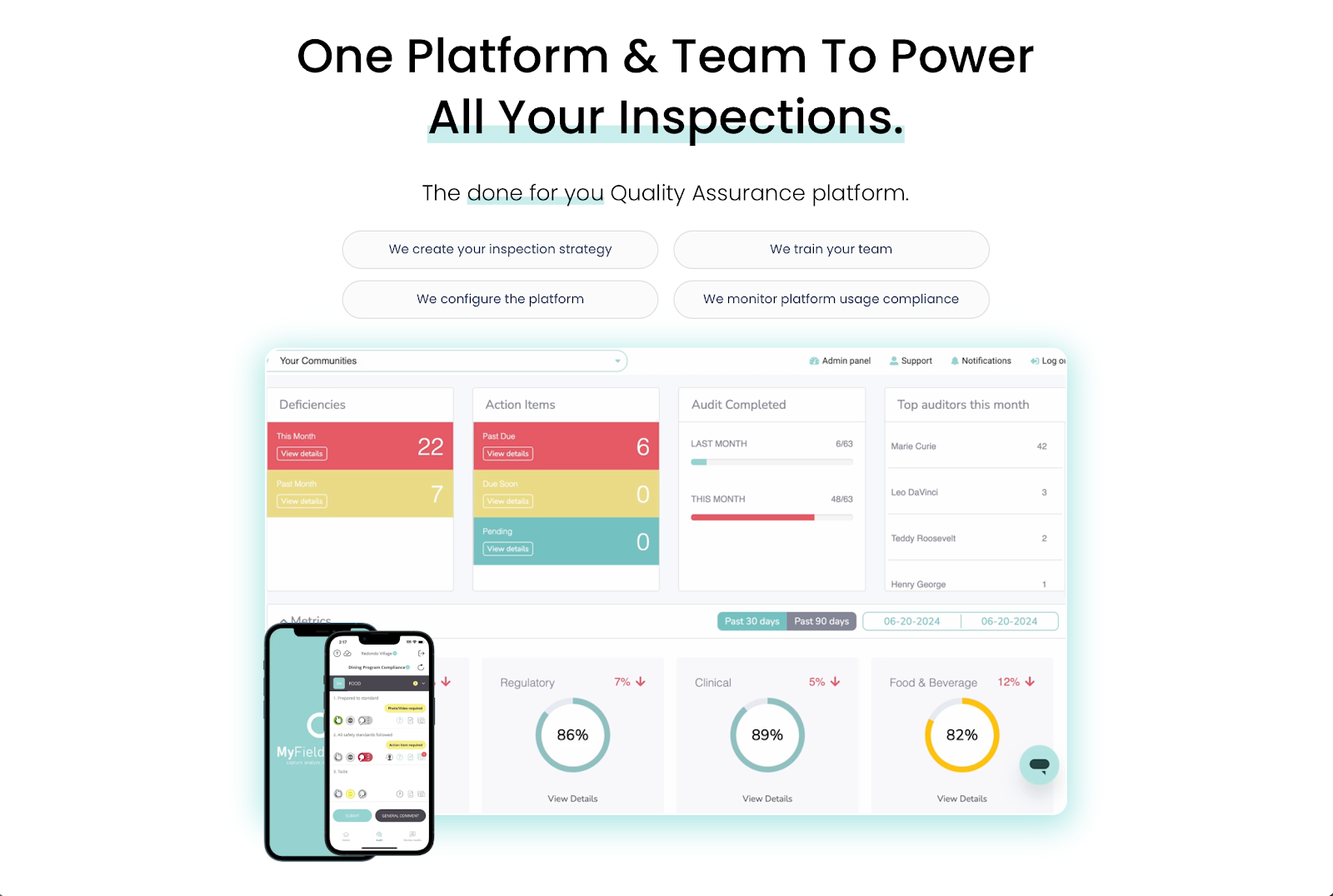
MyFieldAudits helps long-term care facilities stay ready for surveys while proving value to leadership and stakeholders.
Nursing homes and assisted living communities use MyFieldAudits to conduct inspections through a mobile app that staff actually use on the ground. Teams complete checks in real time, flag issues on the spot, and fix problems faster before they grow into survey findings.
Inspection data turns into clean, shareable reports that show what happened, where, and when. This level of visibility builds trust across teams and locations.
More importantly, MyFieldAudits acts as a retention engine for facility operators. It shows ongoing performance, accountability, and follow-through across every site. This improves survey readiness and ensures compliance without relying on paperwork or spreadsheets.
Schedule a demo today to face any survey with confidence! You can also watch this video to learn how MyFieldAudits works.
FAQs About Survey Readiness in Long-Term Care Facilities
What is survey readiness in long-term care facilities?
Survey readiness in long-term care means your facility stays prepared for a survey at all times, not just before inspectors arrive. It lowers stress for your staff, enhances compliance, improves patient safety, and ensures steady funding from Medicare and Medicaid programs.
How often do CMS surveys occur for nursing homes?
CMS surveys for nursing homes usually occur about once every 12 to 15 months. However, complaint surveys can happen at any time. Since timing is unpredictable, long-term care facilities should stay prepared year-round rather than relying on advance notice.
What are the most common survey deficiencies to avoid?
Common survey deficiencies include poor documentation, weak infection control, incomplete care plans, staff training gaps, and unresolved complaints. Regular reviews, staff training, and daily follow-through help facilities avoid these deficiencies.



%201%20(1).svg)