%201.svg)


.svg)
5 Best Internal Audit Management Software for Enterprises


Take Control of QA.
Make Inspections Effortless.

We’ll quickly uncover your needs and share how we can help—no pressure, no stress, just solutions. Grab your spot on our calendar today!
Be survey-ready every day with three simple dining audits
We’ll quickly uncover your needs and share how we can help—no pressure, no stress, just solutions. Grab your spot on our calendar today!
For many enterprise business owners, managing internal audits means juggling multiple tasks at once.
You need to balance audit planning, regulatory compliance, and risk management while making sure your internal audit programs run smoothly across various departments.
Without the right tools, the entire internal audit process can quickly become overwhelming.
Fortunately, internal audit management software offers a solution by automating workflows and centralizing data analytics. This platform helps enterprises stay organized and compliant with various industry regulations.
In this article, we'll list the best software your enterprise can use for internal audit management. We'll also discuss the importance of managing audits effectively.
Why Do Enterprise Businesses Need to Manage Internal Audits?
Enterprise businesses should manage internal audits efficiently to stay on top of regulatory requirements and address potential risks before they become bigger problems.
Without a solid internal audit plan, your enterprise could face compliance violations, financial losses, or even an operational shutdown.
This is why proper internal audit management is so important. It helps you identify areas for improvement to prevent non-compliance issues.
At the same time, it makes sure internal auditors from different departments and regions are aligned. This can reduce the risk of errors that could cost time and money.
What Challenges Do Enterprises Face During Internal Audits?
Large enterprises often face several challenges that can make the audit process more complicated than it needs to be. Below is a closer look at the most common difficulties:
Managing Audit Processes Across Multiple Departments
For enterprises, audits often span multiple departments. Each team may have its own procedures and internal controls, which may affect the consistency of audit results.
Gathering data from different audit teams and making sure everyone follows the same standardized procedures can be difficult.
Without a centralized system, internal audits can lead to errors, missed opportunities, and non-compliance.
Handling Large Volumes of Paperwork
Unlike small businesses, enterprises generate a much larger volume of paperwork every day. Sorting through these documents for an internal audit report can feel overwhelming.
Even if you have everything organized neatly in binders, there's always the risk of losing important information, especially once the paperwork has been passed on to different teams. This can result in incomplete or inaccurate audit findings.
Lack of Real-Time Information and Reporting
During internal audits, your enterprise needs to make decisions based on accurate information and real-time insights.
However, with so many departments involved, reports aren’t generated as fast as you would like them to be.
Different teams may also follow various procedures, which can lead to inconsistencies.
Delayed or conflicting reports can affect audit efficiency, create bottlenecks, and ultimately lead to decisions based on old or incomplete information.
As a result, your enterprise business may face compliance risks or operational setbacks.
Communication Gaps
Internal audits require clear communication between teams, audit committees, and leadership teams to make informed decisions. However, in large enterprises, proper communication is difficult to achieve.
Misunderstandings or delays in sharing information can slow down audits or lead to errors.
Communication gaps can also increase the risk of losing important data. This can cause further delays or disruptions and harm relationships between departments.
Maintaining Audit Trails
For many enterprise organizations, information is spread across different systems or teams. This makes it difficult to track audit activities and prove compliance with regulatory bodies.
Your business might face penalties or reputational damage without an accurate and reliable audit trail.
How Does Internal Audit Software Benefit Enterprises?
An internal audit management tool can address the challenges faced by enterprise businesses. Here's how it can help you:
Simplify the Internal Audit Workflow
An internal audit solution simplifies the entire audit process by automating time-consuming tasks that would otherwise be done manually.
It allows you to manage everything within one platform, from creating audit checklists to assigning follow-up actions.
With automated workflows, your team spends less time on manual audit processes and more time focusing on improving business operations.
Centralize Data Management
Another advantage of using audit software is the ability to centralize all audit-related data.
Instead of collecting paperwork from various sources, everything is stored digitally and accessible within the software.
This is especially helpful when dealing with the entire audit function, which may include multiple departments, systems, and teams.
It provides complete visibility into audit work to make sure everyone is working with the same data. This reduces the risk of data discrepancies.
Provide Real-Time Audit Data
With internal audit software, you gain visibility into real-time data and make decisions quickly.
You no longer have to wait days or weeks for audit data to be compiled. Instead, you can monitor audit progress and spot issues in real time.
This makes it easier to create your annual audit plan, as it lets you see what areas need attention immediately.
Internal audit software also allows you to upload live photos and videos during on-site audits. These documents can’t be faked, so you can ensure that audits are being completed on time and accurately.
Improve Communication Between Key Stakeholders
Internal audit management software is specifically designed to keep everyone within your enterprise on the same page.
It provides access to your internal audit team, department heads, and regional directors. This minimizes the need for back-and-forth emails or in-person meetings to share updates.
The software also allows you to assign tasks, track progress, and flag issues from one platform. It can enhance team communication and ensure the audit process moves smoothly.
Maintain Compliance
Digital software makes it easier to achieve and maintain compliance with global internal audit standards.
It automatically tracks policy management changes, stores records, and maintains audit trails, so you can always prove compliance if questioned.
It can protect your enterprise from potential fines and data security risks. At the same time, it can build trust with clients who expect your business to follow state and federal regulations. This trust can lead to retention, which positively impacts operations in the long run.
5 Best Internal Audit Management Software Solutions for Enterprises
After learning the benefits of audit software, you're probably excited to use one for your enterprise. Below are the best internal audit management software you can consider:
1. MyFieldAudits
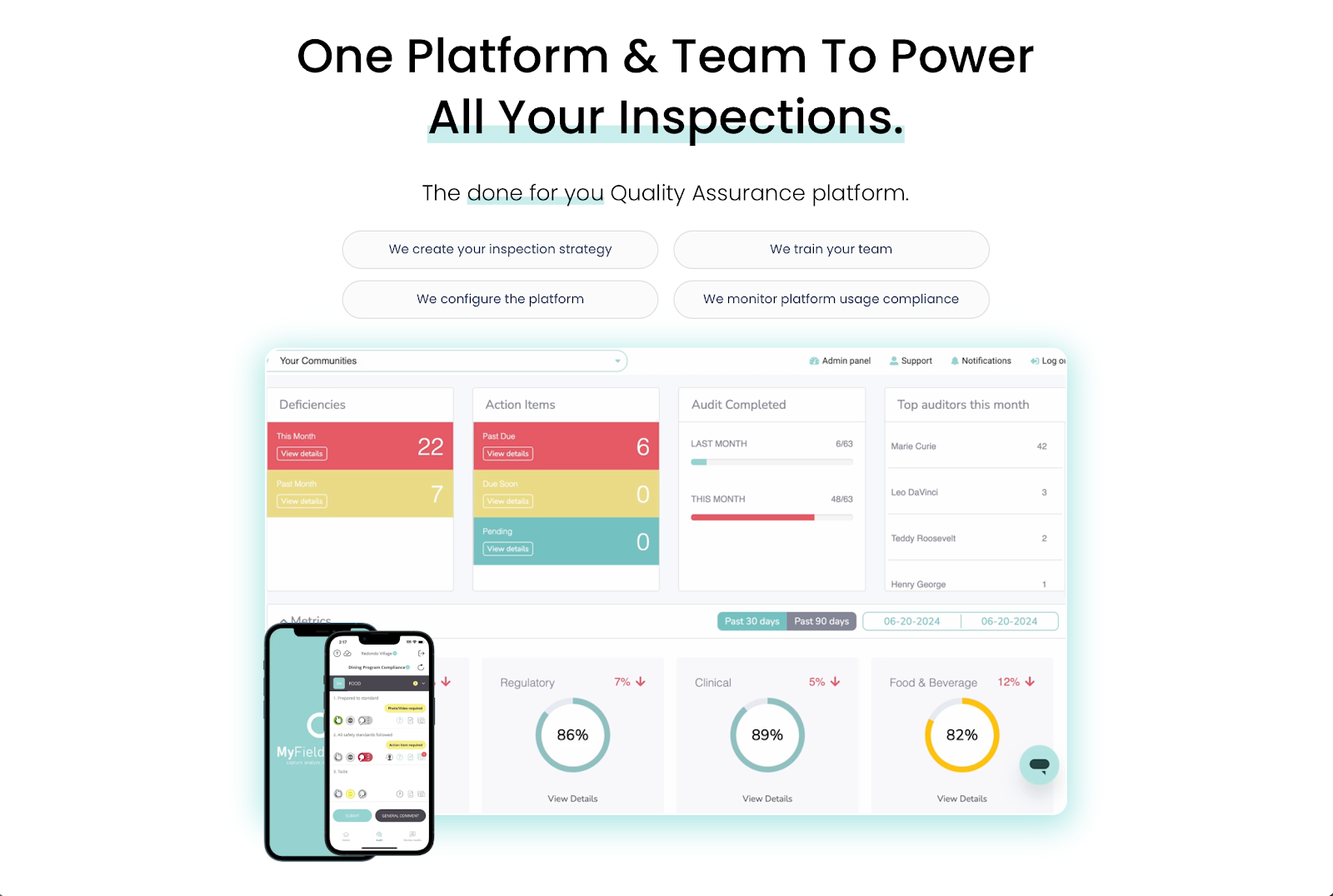
MyFieldAudits stands out as a trusted partner, not just a software vendor, for enterprise organizations aiming to improve their internal audit and inspection processes.
This platform goes beyond basic auditing features. Instead, it helps clients build fully customized quality assurance (QA) programs aligned with their operational goals.
It also supports large-scale, multi-departmental oversight by enabling organizations to schedule internal audits, implement corrective actions, and capture real-time data like photos and videos.
More importantly, MyFieldAudits offers a full-service approach to internal audit management. Their industry experts work closely with enterprise clients to configure the platform, train staff, and monitor compliance.
This approach allows enterprise operators to fix on-site issues faster and drive continuous improvement across multiple locations.
Key Features
- Advanced platform: MyFieldAudits has a user-friendly dashboard that supports flexible scheduling, audit management, and evidence collection through photos and videos.
- Customized solutions: MyFieldAudits can develop internal audits aligned with organizational goals and regulatory requirements.
- Dedicated support: Industry experts take care of training, ongoing monitoring, compliance reporting, and platform configuration to help clients reduce manual oversight and save time.
- Enterprise-level focus: Designed for large organizations, not individuals or those seeking off-the-shelf solutions.
MyFieldAudits transforms how enterprise organizations manage internal audits. They handle the heavy lifting to help clients focus on capturing valuable insights that drive operational excellence.
Schedule a demo today to get instant clarity on your operations! You can also watch this video to learn how MyFieldAudits handles it all so you can return to what you do best.
2. MetricStream
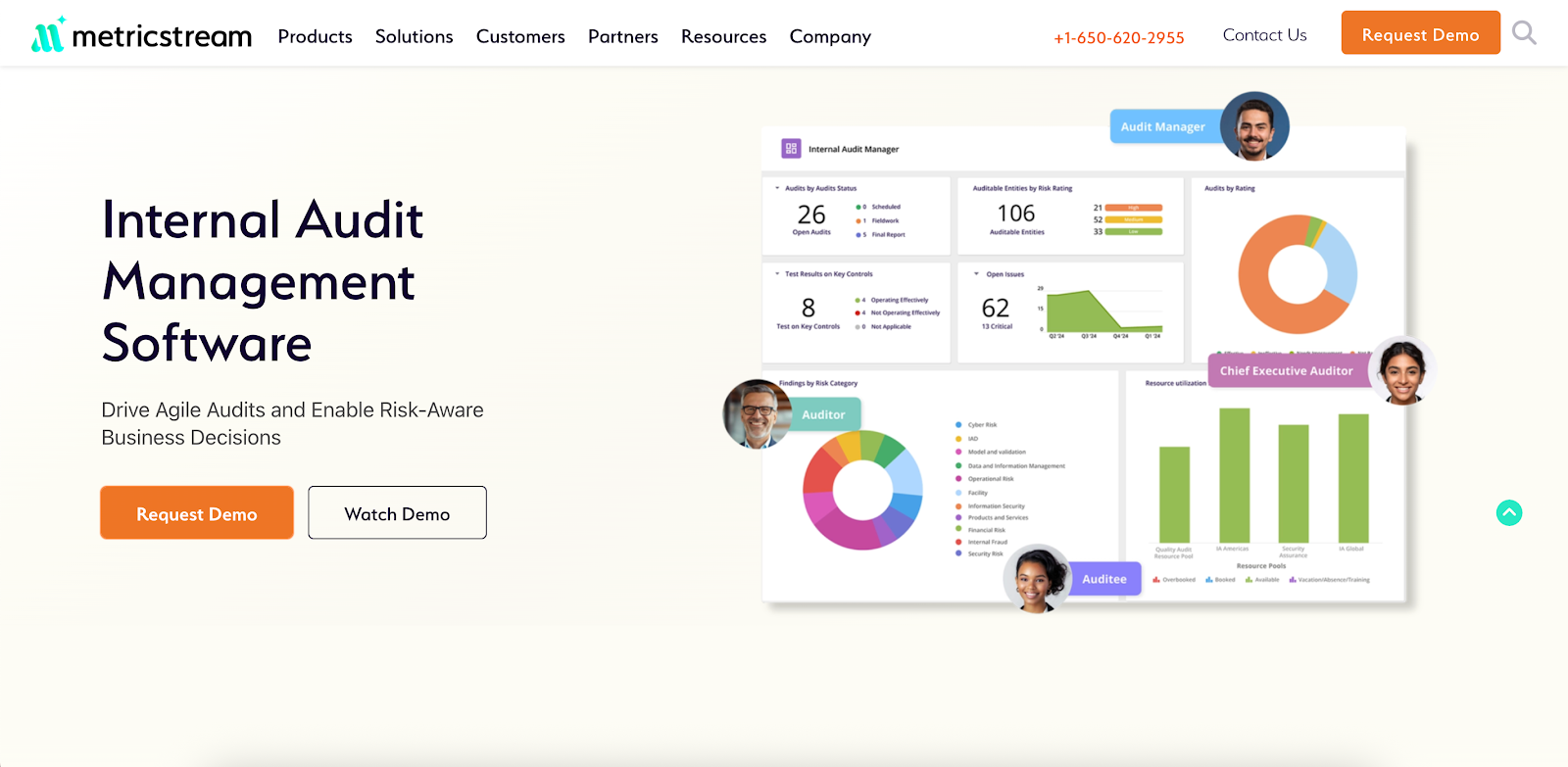
MetricStream's internal audit software helps enterprises manage audits across global operations. It provides data-driven insights into risks, resource availability, and audit history.
It lets organizations focus on key business areas, which can ensure regulatory compliance and simplified operations.
Key Features
- Risk-based audits: Prioritize audits based on risk assessment to focus on critical areas.
- AI-powered issue management: Use AI to identify risks and automate issue remediation.
- Collaborative tools: Multiple auditors can work on the same audit, which can improve efficiency.
- Real-time dashboards: Monitor audit progress and generate final audit reports in real time.
3. AuditBoard
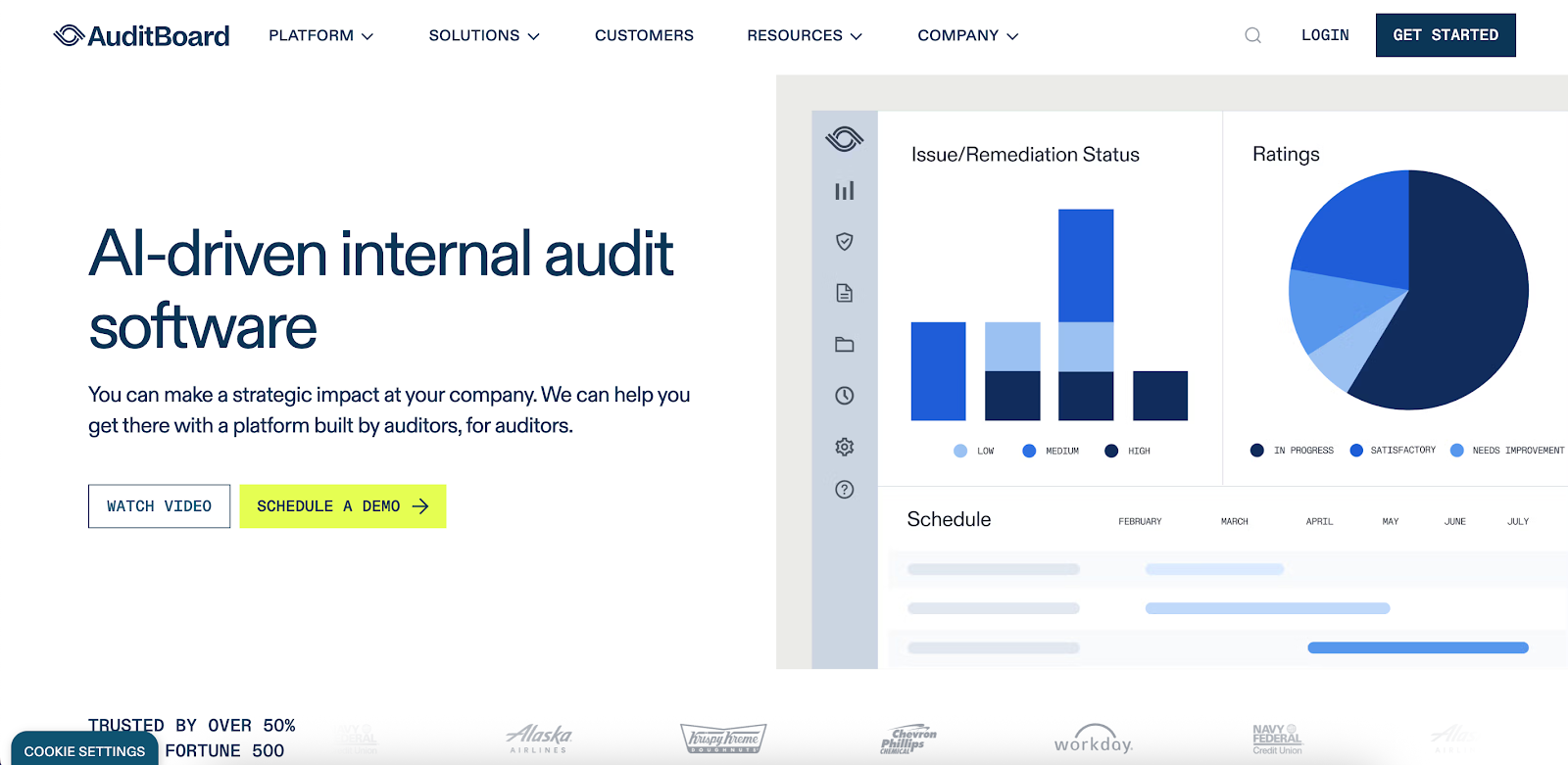
AuditBoard is a powerful internal audit management platform that centralizes audit planning, fieldwork, and reporting.
With real-time dashboards and collaboration tools, it improves both team and stakeholder communication.
Key Features
- Centralized audit management: Oversee the entire audit process from one platform, including planning and reporting.
- Real-time risk assessments: Identify and address risks as they arise to ensure thorough audit coverage.
- Collaboration tools: Build strong relationships with stakeholders across the enterprise.
- Automated workflows: Automate repetitive tasks and generate detailed reports to improve decision-making.
4. SAP Audit Management
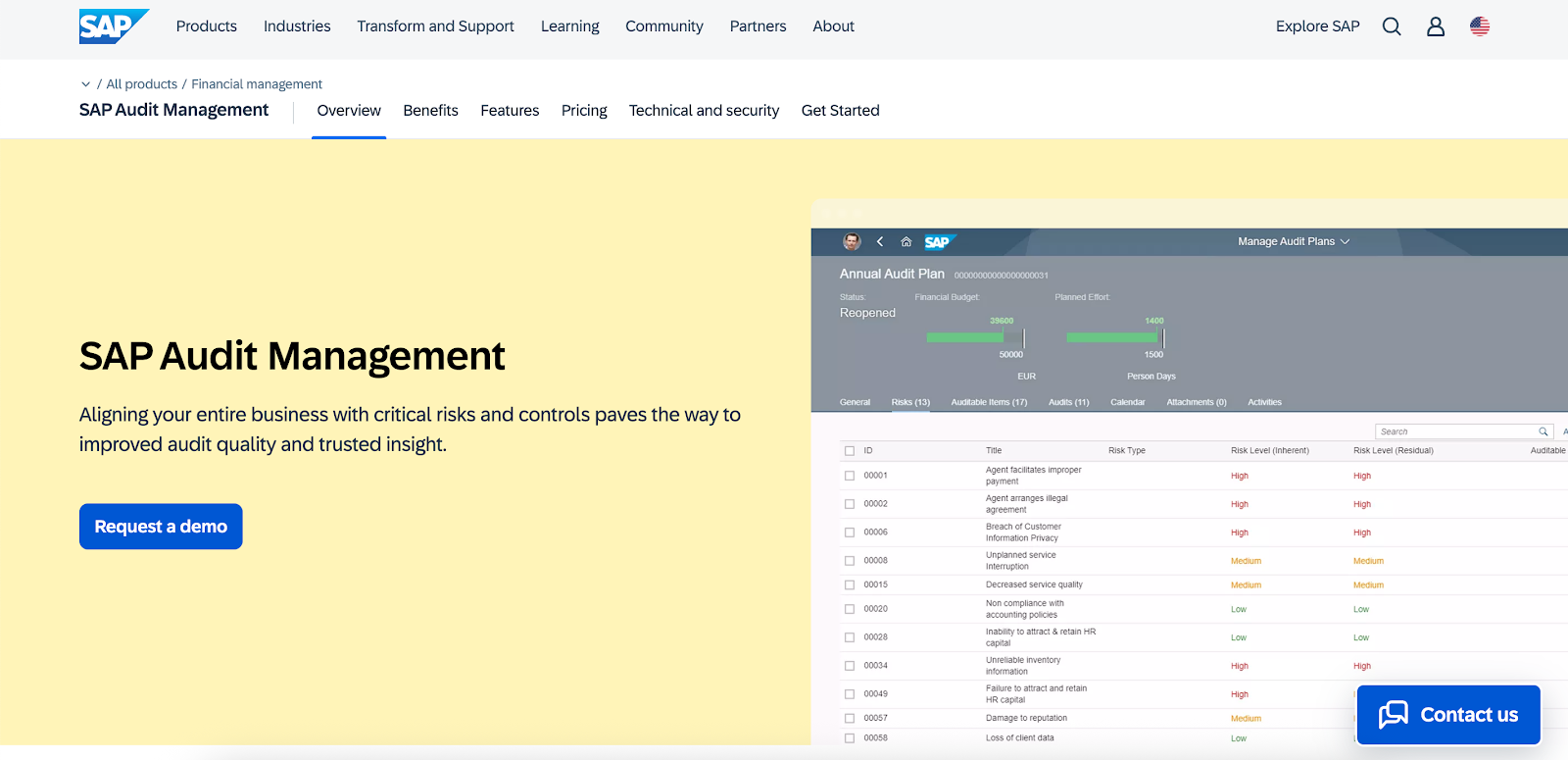
SAP Audit Management is an enterprise-grade solution that helps organizations manage the entire audit process in a centralized environment.
Built within the SAP ecosystem, it seamlessly integrates with other SAP modules to improve data accessibility and operational efficiency.
The platform enables teams to plan, execute, and report on audits with greater speed and accuracy.
Key Features
- End-to-end audit management: Plan, execute, and report audits in a fully integrated digital workflow.
- Mobile auditing capabilities: SAP enables audit teams to conduct mobile inspections using cellphones or tablets.
- Seamless SAP integration: Connect to other SAP modules for unified data access and improved enterprise risk management.
- Central dashboards: Receive real-time insights into audit results to optimize resource planning and staff utilization.
5. TeamMate
TeamMate by Wolters Kluwer is a popular internal audit solution for large enterprises. It can manage risk assessments, audit planning, execution, and financial reporting within a single platform.
TeamMate empowers organizations to enhance audit quality, improve visibility, and deliver greater assurance across their internal control systems.
Key Features
- Audit lifecycle management: TeamMate supports everything from audit planning to execution and reporting in one unified system.
- Advanced analytics: The platform delivers detailed insights and dashboards to track audit performance and compliance trends.
- Open ecosystem: Integrate TeamMate with critical systems and data to promote system-level collaboration.
- Stakeholder engagement: Create visual reports to engage with different stakeholders.
Let MyFieldAudits Manage Internal Audits for You
MyFieldAudits provides a done-for-you quality assurance platform that helps enterprises manage internal audits with ease.
Their advanced software solution allows you to conduct inspections in real time and get instant clarity into your operations.
Every location, department, and team also gets its own dashboard, which improves communication throughout your organization.
Audits and inspections automatically sync to reports that you can share with clients and other stakeholders. This builds trust and retention.
However, MyFieldAudits is more than just another audit management software. It acts as a retention engine.
Industry experts will help you develop a tailored audit strategy, configure the software, provide training, and monitor compliance. This allows you to focus on what matters most.
Schedule a demo today or watch this product overview to learn how MyFieldAudits handles the heavy lifting for you!
FAQs About Internal Audit Management Software
What is the best internal audit software?
The best internal audit software depends on your specific operational needs and organizational goals. MyFieldAudits stands out for managing the entire lifecycle of on-site inspections and audits for enterprises.
Industry experts will take care of quality assurance, compliance monitoring, and training for your internal audit team.
What is an internal audit management system?
An internal audit management system refers to software or a structured process that plans, conducts, and reports internal audits in one place. It improves team communication, risk control, and business performance.
This enables organizations to identify issues early and stay ahead of compliance risks.
What is audit management software?
Audit management software is a digital tool that helps companies plan, execute, and track internal audits more efficiently. It replaces manual processes with automation, improves accuracy, and keeps all audit data in one place.
This makes it easier to manage risks, ensure compliance, and generate audit reports quickly.



%201%20(1).svg)